Gender and Diplomacy
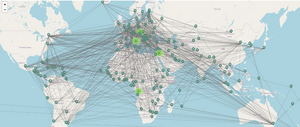
Analysing Gender and Diplomacy using Neo4j and Pandas
In December 2025, I completed my BSc in Computing and IT at the Open University in the UK. For my final project, I deliberately chose a topic that connects my interest in data analysis with my professional field, diplomacy.
My final research project focused on gender and diplomacy. In summer 2024, I discovered the GenDip dataset developed by the University of Gothenburg. This dataset maps all diplomatic relations by gender for the period 1968–2021 and was published with an explicit invitation for scholars to analyse the data and enrich it with additional sources. One of the central questions posed by the project was whether states use the appointment of female ambassadors as an instrument of diplomacy in its own right.
I used a range of data analysis tools to address this and related questions, with particular attention to how the structure of international relations networks influences the behaviour of the diplomatic network. My research is based on graph analysis and offers alternative perspectives on explaining the persistent under-representation of women in diplomacy.
This report is an elaboration of the final research project. It presents the data analysis on gender and diplomacy and documents both the research process and its results. Much of the required reflections by the Open University on the learning process, references to previous OU modules and explanations of how the research builds upon them have been omitted here.
Despite some statistical limitations, my research confirms the GenDip findings on the systematic under-representation of women in diplomacy. By integrating additional datasets, I also propose alternative explanations. Here are some of the main findings:
- The project demonstrates the potential of graph data science for research on diplomacy and international relations.
- Women are under-represented in senior diplomatic positions, and states appear to make strategic decisions about where to post female ambassadors.
- Countries with women holding influential positions in key foreign policy areas tend to attract a relatively higher share of female ambassadors.
- Living conditions and levels of gender inequality in host countries are significant indicators: women are more frequently posted to countries with better overall conditions.
- Despite its limitations, the additional religion dataset suggests that Buddhist and Muslim countries send a higher proportion of their female ambassadors to countries that promote gender equality, indicating that religion may be a factor worthy of further investigation.
- The project started with the question of whether countries use female ambassadorial appointments as a political signal. By combining relevant variables with network centrality measures, I identified countries, beyond the frequently cited case of Saudi Arabia, that deviate from the dominant patterns within the diplomatic network. In this way, the analysis aims to provide useful input for future research.
To read the study, click Open PDF